Click here to buy secure, speedy, and reliable Web hosting, Cloud hosting, Agency hosting, VPS hosting, Website builder, Business email, Reach email marketing at 20% discount from our Gold Partner Hostinger You can also read 12 Top Reasons to Choose Hostinger’s Best Web Hosting
You’re reading a document in another language, replying to an international email, or trying to understand a foreign website—and Google Translate feels like the fastest solution. But there’s always that doubt: Is Google Translate accurate, or am I about to misunderstand something important? That uncertainty becomes stressful when the text is legal, medical, academic, or business-critical. One wrong word can change the meaning entirely. This is where clarity matters. In this article, we break down the fact that is Google Translate accurate, when it’s safe to rely on it, when it isn’t, and how to use it responsibly without risking miscommunication.
Click on this CMF Buds Wireless Bluetooth Earbuds to make voice calls from your WhatsApp for noice free talking with your family and friends.
What Is Google Translate and How Does It Work?
Google Translate is a machine translation system developed by Google that supports over 130 languages. Since 2016, it has been powered primarily by Google Neural Machine Translation (GNMT), a deep-learning system designed to translate entire sentences instead of word-by-word phrases.
Unlike older translation engines, GNMT:
Analyzes context, not just vocabulary
Learns from massive multilingual datasets
Improves fluency and sentence structure over time
Google officially announced this shift in its research blog, highlighting major improvements in naturalness and comprehension compared to previous systems (Google AI Blog, 2016).

So, Is Google Translate Accurate? The Short Answer
Yes—Google Translate is generally accurate for basic and everyday use.
No—it is not reliable enough for high-stakes or professional-grade translation.
(Ad)

Accuracy depends on four key factors:
Language pair
Text complexity
Context and cultural nuance
Purpose of translation
Let’s break each one down.
5 Simple Ways to Translate Text in Any Language Without Leaving a Website
1. Accuracy by Language Pair (This Matters More Than You Think)
Google Translate performs best when translating between high-resource languages, such as:
English ↔ Spanish
English ↔ French
English ↔ German
English ↔ Portuguese
These languages have enormous training data, allowing the AI to learn grammar, idioms, and structure effectively.
However, accuracy drops when dealing with:
Low-resource languages
Regional dialects
Rare language combinations (e.g., Finnish → Urdu)
In these cases, translations may sound unnatural, overly literal, or grammatically incorrect.
Key insight:
Google Translate doesn’t “understand” language—it predicts the most statistically likely sentence. Less data means weaker predictions.
Microsoft Word isn’t just a word processor. It’s a powerful tool packed with features that can save you time, improve your work, and make life a little easier. Whether you’re a student, writer, or just someone who types occasionally, these Microsoft Word secrets will change the way you use Word.
2. Accuracy by Content Type
Where Google Translate Works Well
Google Translate is generally accurate for:
Everyday conversation
Informational web pages
Travel phrases
Product descriptions
Simple instructions
In these cases, meaning is usually preserved even if phrasing isn’t perfect.
Where It Often Fails
Accuracy drops significantly for:
Legal contracts
Medical documents
Academic research
Marketing copy
Poetry, humor, or sarcasm
A well-documented academic evaluation from the Conference on Machine Translation (WMT) shows that while neural translation systems perform well on news-style text, they still struggle with domain-specific and creative language (WMT Findings, ACL).
3. Common Google Translate Mistakes You Should Watch For
Understanding how Google Translate fails helps you spot errors quickly.
Literal Translation of Idioms
Idioms often lose meaning:
“Break a leg” → literal physical injury
“Spill the beans” → food-related nonsense
Gender and Pronoun Errors
Many languages require gendered verbs or nouns. If the source language is neutral, Google Translate may guess incorrectly.
Tone and Formality Issues
Formal text may become casual—or vice versa—especially in languages like Japanese, Korean, or German.
False Confidence
The biggest danger isn’t obvious errors—it’s translations that sound fluent but are subtly wrong.
4. Is Google Translate Reliable for Professional Use?
Short Answer: No—Not Without Human Review
Google Translate itself clearly states it should not be used as a replacement for professional translators in critical situations.
Here’s a realistic breakdown:
| Use Case | Recommended? |
|---|---|
| Casual emails | ✅ Yes |
| Travel communication | ✅ Yes |
| Blog research | ✅ Yes (with caution) |
| Business contracts | ❌ No |
| Medical instructions | ❌ No |
| Legal documents | ❌ No |
| Marketing slogans | ❌ No |
Professional translators don’t just translate words—they interpret intent, culture, and legal meaning.
5. How Accurate Is Google Translate Compared to Humans?
Human translators:
Understand cultural nuance
Detect ambiguity
Ask clarification questions
Adapt tone intentionally
Google Translate:
Optimizes probability
Cannot verify intent
Cannot ask questions
Cannot take responsibility
In controlled studies, professional human translators consistently outperform machine translation in accuracy, nuance, and reliability, especially in specialized domains.
That said, Google Translate is often 80–95% accurate for common language pairs and simple text—good enough for understanding, not for final delivery.
6. How to Use Google Translate More Safely (Practical Tips)
If you must use Google Translate, do it smartly:
1. Write Clearly Before Translating
Use short sentences
Avoid slang and idioms
Be explicit with subjects
2. Translate Full Paragraphs, Not Single Lines
Context improves accuracy.
3. Back-Translate for Sanity Checks
Translate the output back to the original language and compare meaning.
4. Never Publish Without Review
If the content matters, have a native speaker review it—even briefly.
5. Use It as a Draft Tool
Think of Google Translate as a first draft assistant, not a final editor.
7. Google Translate vs Other Translation Tools
While Google Translate is the most widely used, alternatives exist:
DeepL: Often more natural for European languages
Microsoft Translator: Strong enterprise integrations
Professional CAT tools: Best for business workflows
Each tool has strengths, but none eliminate the need for human judgment in high-risk scenarios.
Key Takeaways
Google Translate is accurate for everyday, low-risk use
Accuracy depends heavily on language pair and text complexity
It struggles with legal, medical, and creative content
Fluent output does not guarantee correct meaning
Best used as a draft or comprehension tool—not a final authority
FAQs (People Also Ask)
Is Google Translate accurate for legal documents?
No. Legal translations require certified professionals due to precision and liability concerns.
Which languages are most accurate on Google Translate?
High-resource languages like English, Spanish, French, and German tend to be the most accurate.
Can Google Translate replace human translators?
No. It can assist, but it cannot replace human expertise where nuance and accountability matter.
Is Google Translate getting better over time?
Yes. Neural models continue to improve, but limitations still exist—especially in specialized domains.
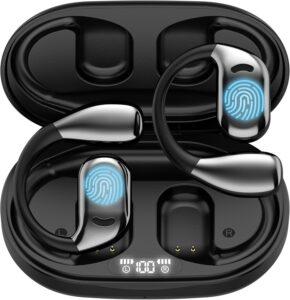 AI Language Translator Earbuds Shop Now
Multi-scenario translation modes & privacy protection: The headset provides a variety of innovative translation modes, including free talk mode, offline mode, audio transcription and photo translation, ensuring clear communication in different scenarios. The headset supports offline language translation, which protects user privacy and avoids network latency and the risk of data leakage.
Multi-language translation: High-precision 144-language translator earbuds, real-time two-way translation and certain off-line package requires in-app purchase including Chinese, English, Japanese, Korean, Russian, German, French and Spanish.
3-in-1 Functionality and HD Sound Quality: These language translator earbuds offer versatility and convenience for work and everyday life, combining translation, music playback, and phone calls. The translator earbuds provide HD sound quality to ensure clear audio, regardless of the occasion.
Conclusion
So, is Google Translate accurate?
Yes—for understanding, speed, and convenience.
No—for precision, accountability, and nuance.
Google Translate has transformed global communication and remains one of the most powerful free AI tools available. But accuracy isn’t just about grammar—it’s about meaning, context, and consequence. If the translation matters, treat Google Translate as a helpful assistant, not the final decision-maker.
For more practical guides on digital tools, AI productivity, and real-world tech usage, explore related tutorials on SmashingApps.com and stay informed.
Sources (Official / Original):
Google AI Blog – A Neural Network for Machine Translation (GNMT)
Conference on Machine Translation (WMT), ACL Findings
Now loading...