Click here to buy secure, speedy, and reliable Web hosting, Cloud hosting, Agency hosting, VPS hosting, Website builder, Business email, Reach email marketing at 20% discount from our Gold Partner Hostinger You can also read 12 Top Reasons to Choose Hostinger’s Best Web Hosting
Fiverr vs Upwork — a clear 2026 comparison for freelancers and clients. Learn how fees, hiring flows, project types, protections and growth paths differ so you pick the right platform for your work or hiring needs.
Fiverr is excellent for quick, task-based work and agencies that want predictable gig-style buying; Upwork is better for longer-term contracts, specialized talent, and clients who need tighter project management and hourly billing. Fees, workflow and buyer expectations differ — match the platform to your goals. (Key fee notes below are current as of early-2026.)
Write for Us and Join Our Innovative Blogging Community
Quick TL;DR
Choose Fiverr if you want:
Quick hires for single deliverables (logos, short videos, one-off tasks)
Predictable gig pricing and fast delivery
Simple buyer experience and marketplace-style browsing
Choose Upwork if you want:
Longer contracts (hourly or fixed-price) and ongoing engagements
More vetting, proposals, interviews and richer project management
Enterprise-ready features and deeper talent discovery for specialized roles
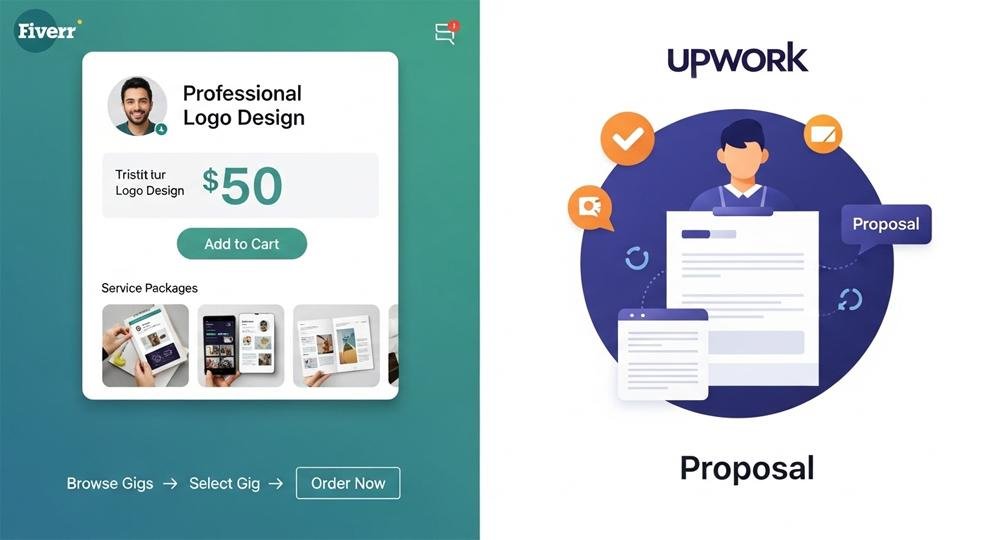
How the two platforms work
Fiverr — gig marketplace, productized services
Fiverr started as a “gig” marketplace where sellers list discrete services (gigs) at set prices. Buyers can browse categories, review portfolios, buy a gig, and get delivery within the seller’s stated timeframe. Fiverr has expanded (hourly options, subscriptions, business tools), but the core experience remains productized services and quick turnarounds.
Upwork — open marketplace, proposals & contracts
Upwork is proposal-driven: clients post a job, freelancers submit proposals (or invite talent), and work proceeds under hourly or fixed-price contracts with time-tracking, milestones and in-platform collaboration tools. Upwork emphasizes longer engagements and richer client-freelancer negotiation.
Link Insertion vs Guest Blog Posting: A Comparative Analysis
Fees & money
Fiverr
Sellers pay a flat 20% commission on earnings (i.e., Fiverr keeps 20%). Buyers pay a service fee at checkout (commonly ~5.5% plus small order fees for low-value purchases). Payment processing and certain extra fees may also apply. This makes Fiverr straightforward but costly on small orders because the 20% seller cut is fixed.
Upwork
(Ad)

Upwork’s freelancer service fee historically used a sliding scale by lifetime billing with a client (20% → 10% → 5%). In recent years Upwork has adjusted fee models and uses variable service-fee structures and membership/Connects for freelancers. Check Upwork’s official fee page for your country and contract type — fees can vary by contract and plan.
Why this matters: On Fiverr, a $100 gig nets $80 to the seller. On Upwork, a long-term client relationship can reduce the effective fee as lifetime billings grow; but initial contracts often face higher effective fees. Always factor platform fees into your pricing.
Types of work that thrive on each platform
Fiverr winners: logos, explainer videos, short social clips, templates, micro-copy, small WordPress tasks, one-off design/marketing assets. Productized gigs with clear deliverables do best.
Upwork winners: engineering, long-term product development, ongoing marketing campaigns, larger design projects, data science, legal or accounting work. Anything that benefits from onboarding and multi-week/month contracts fits Upwork well.
Hiring process & quality control
Fiverr: fast — search, filter by rating/price, purchase. Buyers rely on reviews, seller portfolios and seller levels (e.g., Top Rated Seller). Less pre-hire vetting; more trial-and-error sometimes required.
Upwork: proposal + interview model. Clients can request interviews, test tasks, and use built-in time tracking and milestone payments. Upwork also offers talent vetting programs (Top Rated, Talent Cloud) and enterprise features for higher-stakes hiring.
What is Guest Posting in SEO and 20 Free Guest Posting Sites List
Protection, disputes & payments
Fiverr: escrow-like flow — payment is released to the seller after delivery and buyer acceptance. Fiverr handles disputes and refunds; buyers pay at purchase time but can open tickets if delivery is unsatisfactory.
Upwork: hourly contracts use a Work Diary for billing protection (Upwork Hourly Protection). Fixed-price contracts use escrow with milestone releases. Upwork’s dispute process is available for both contract types. For larger projects, these protections and time-tracking are valuable.
Freelancer experience: getting noticed & building a business
Earnings velocity: Fiverr can be faster to start selling (create gigs, get orders), but competition on low-priced categories is fierce. Upwork requires more proposal effort but can lead to higher-value, longer-term clients.
Branding & scale: Agencies or freelancers reselling services often use Fiverr for volume gigs, while Upwork is favoured for building retainer-based or team projects.
Platform dependence: Both platforms have higher take rates than direct client work; many freelancers use them as lead channels and then move high-trust clients off-platform (where terms allow).
Business context
Platforms adjusted strategies post-pandemic: both Fiverr and Upwork have sought profitability and higher take rates while pushing premium and enterprise services. If you’re buying or selling, expect continued changes to fees and product features as platforms chase sustainable margins and enterprise customers.
Pros & Cons
Fiverr — Pros
Fast to list & sell
Great for productized services
Predictable gig-style buyer UX
Fiverr — Cons
20% seller cut can be steep on many gigs
Less control over client vetting
Competitive low-price categories
Upwork — Pros
Strong for long-term and complex projects
Better project/tracking tools & dispute protections
Enterprise features and richer hiring workflows
Upwork — Cons
Proposal overhead before winning work
Fee structures can be complex and vary by contract
More competition for top jobs; profile building takes time
Practical tips — clients & freelancers
If you’re a client:
Use Fiverr for trial tasks, demonstrations, or one-off deliverables (fast and cheap).
Use Upwork for multi-phase projects, contractors you want to retain, or work that needs hourly tracking and milestones.
If you’re a freelancer:
On Fiverr, productize repeatable services with clear scope and deliverables; price to cover the 20% fee and buyer checkout fees.
On Upwork, invest time in a strong profile, tailored proposals and initial tests — aim for longer-term contracts where lifetime billing reduces fees.
Lifestyle Guest Posting Sites – 15 Places That Still Accept Pitches (and how to get accepted)
FAQs
Q: Which platform costs more in fees — Fiverr or Upwork?
A: It depends. Fiverr charges sellers a flat 20% commission and a buyer service fee (often ~5.5%). Upwork’s fees vary by contract and time — historically a sliding scale (20/10/5) but Upwork’s fee models have changed in recent years; check Upwork’s fee page for current details.
Q: Can I use both platforms?
A: Yes — many freelancers sell productized gigs on Fiverr while pursuing higher-value, longer contracts on Upwork. Use each platform for what it does best.
Q: Which is better for long-term clients?
A: Upwork — its proposal system, hourly tracking and milestones are designed for long-term engagements.
Q: Can buyers get refunds?
A: Both platforms have dispute and refund processes. Fiverr holds funds until delivery/acceptance and Upwork uses escrow/milestones — read each platform’s policy for details.
How to Find High-Quality and Authority Backlinks for Your Website
Image suggestions & ALT text
Hero: split screen — Fiverr gig listing (design) vs Upwork job posting and proposals. ALT: “Fiverr gig listing next to Upwork job posting.”
Diagram: buyer workflow comparison (browse & buy vs post & hire). ALT: “Fiverr browse-and-buy vs Upwork proposal workflow.”
Table: fee comparison snapshot. ALT: “Fee comparison between Fiverr and Upwork.”
Final takeaway
Both Fiverr and Upwork are powerful freelance marketplaces — but they serve different needs. Fiverr wins when you want productized, fast, one-off work; Upwork wins when you want to build relationships, manage larger projects, or hire specialists for sustained engagement. Smart freelancers and businesses often use both — matching platform to project type and pricing strategy.
Sources & further reading
Fiverr Payment Terms & fees.
Upwork freelancer fees & service fee docs.
Market context and platform take-rates.
Now loading...